
Important banks -- very important banks -- that spent their lives giving advice about Brazil and what we should or shouldn't do are now broke.Ouch.
Showing posts with label Brazil. Show all posts
Showing posts with label Brazil. Show all posts
Monday, September 22, 2008
The credibility crunch
As I mentioned briefly last week in Zeitlinks, one of the greatest casualties of the current financial crisis will likely be the credibility of American-style, lightly-regulated capitalism. Today, via FP Passport, I saw that President Lula da Silva of Brazil couldn't resist taking a potshot at the American banks involved:


Tuesday, August 26, 2008
Cotton subsidies under attack
 The IHT is reporting that Brazil is seeking recommendations from the WTO on the application of retaliatory sanctions against the United States, which refuses to abandon its subsidies to cotton farmers. This is a significant development, because the WTO’s Dispute Settlement Understanding (DSU) takes a considerable amount of time to proceed to a point where sanctions are authorized. The DSU process goes something like this: 1.) the two countries try to settle their disputes through consultations. 2.) If no solution can be reached, then a panel is formed and rules on the dispute. 3.) Either the defendant country or the complainant country can appeal the ruling, in which case the Appellate Body reviews the ruling and either upholds or overturns it. 4.) If the defendant country is ruled against (complainants usually win) and does not comply with the adverse ruling after a reasonable period, then the complainant is authorized to apply sanctions. In this case, Brazil first challenged the US all the way back in 2002 (DS267: United States subsidies on upland cotton.)
Having just finished my Master’s dissertation on the WTO’s DSU, this is quite exciting. The cotton subsidies are glaringly inconsistent with America’s WTO obligations, and it would be better for the majority (the interests of American consumers, American taxpayers, international consumers, Brazilian producers vs. the interests of American producers) if the subsidies were eliminated.
It will be interesting to see how much the Appellate Body prices the trade distortion at, and whether or not Brazil’s sanctions have any effect. In my dissertation, I argued that ‘high-value’ disputes such as these tend to emphasize relative power capacities over the legal process in determining outcomes. To put it bluntly, it will depend on whether Brazil can hit the US hard enough with its sanctions to make keeping the subsidies more painful than eliminating them. According to the US Dept of Commerce, American exports to Brazil were worth $24.6 billion in 2007. That ought to give the Brazilians a hefty amount of retaliatory capacity.
Brazil is also considering initiating a trade dispute against American ethanol tariffs. International litigation is hardly an ideal way for America to develop coherent domestic policies. But if the United States is unable to produce farming and energy plans that don’t overly-privilege specific domestic sectors at the expense of the rest of the country, perhaps we can look to our trading partners to sue the hell out of us until we see the light. (That was a joke, but only just…)
(Picture by Brian Hathcock)
Thursday, August 21, 2008
The return of history
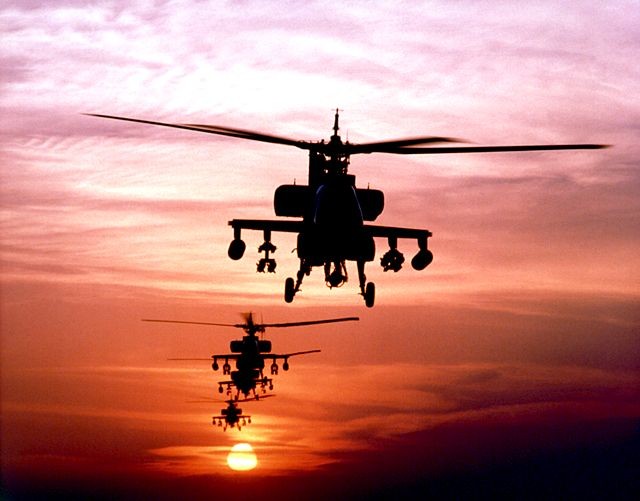 Eric Posner over at the Volokh Conspiracy makes an interesting prediction:
"When historians write about the post-cold war era, which began in 1989, the date of its termination will not be 9/11/2001, as has been frequently claimed, but 8/7/2008, when Georgian forces attacked separatists in South Ossetia and Russia responded with an invasion. August 7 marks the end of American sole-superpowerdom, or hyperpowerness, or hegemony, or whatever you want to call it, an interval somewhat longer than but still very similar to the periods of global preeminence the United States enjoyed for a few years after World War I and World War II."
The war in Georgia has sparked some intense reflection on the state of international relations and American power. I agree that the American moment of hyperpower (I really love that term) is over. But this was never an unexpected development: the US used its hegemonic position after the Second World War to foster a liberal international economic order and promote stability, mutual economic cooperation, and growth. But hegemony is a concept that measures states’ relative power capacities, so by encouraging a system which facilitates world economic growth, sooner or later America’s power would decline in relation to the rest of the world. As hegemonic stability theory teaches us, a good hegemon sows the seeds of its own decline.
International relations is driven by political and economic factors. The political events by which we mark history may lead us to conclude that America’s decline is something new, but in reality the economic forces which caused it have occurred gradually since the end of World War II. Thus, while perhaps the political environment after the Cold War suggested an ‘end to history’, a cursory look at the world’s economic structure would have cautioned that, at best, history was taking a short break.
In any case, the world has certainly woken up. State relations will need to evolve to accommodate a new power structure, but I am not particularly pessimistic about a multipolar world. Today, the US is still the world’s most powerful nation politically, militarily, and economically. The United States will continue to lead but increasingly will need to engage with other nations on less favorable terms. That said, we should be careful not to overestimate the importance of Russia’s recent actions in Georgia. Economic growth has empowered both potential rivals like Russia and new partners like Brazil and India.
In many ways, Russia is an outlier in modern international relations and may need to be treated as such. Its wealth is based largely on strategic energy reserves. It is a bully when it comes to trade (look at its relations with the EU regarding natural gas.) But if you look at the other BRIC countries, you see economies with strong global links that have an interest in systemic stability. It is more likely that such countries can become “responsible stakeholders” in the global political-economic structure.
History clearly isn't over. But then again, it never was.
(Related: see Rory’s excellent treatment of the resurgence of nationalism over at IPE Journal)
Thursday, August 7, 2008
This is your brain on ethanol
 As the other half of the Zeitgeist editorial board, I'd like to take this opportunity to strongly endorse my coauthor's denunciation of corn-based ethanol. By this point, I think it's safe to say that the only ones who are really benefitting from our flirtation with domestic ethanol production are the people of Iowa. The rest of us are really getting the short end of the stick. Some thoughts:
 The relatively new and historically-unprecedented demand for corn is putting an enormous strain on American farmers' production capacity. Land that could be used to grow other crops is now devoted to corn, which causes the prices of those agricultural products to rise (this is why historically the grain futures markets track each other very closely, and why soybean prices almost mirror corn prices.) Meat is becoming more expensive, because a good deal of livestock feed is corn-based, and it takes about 700 calories of corn to produced about 100 calories of meat. A USDA economist recently estimated that about 3% of corn's price increase could be attributed to ethanol demand. Compare that with the UN Food and Agricultural Organization, which argued that it was almost 30% (did the USDA forget to move a decimal point?), and the World Bank who've put the number as high as 70%.
What to do about all of this? There are a few sensible steps to take. First, stop subsidizing ethanol production. It's an enormous waste of money and it's never going to be anywhere near efficient enough to justify. Another oft-repeated but damning statistic: you could feed a person for an entire year with the amount of grain it would take to fill an SUV's 25-gallon gas tank once.
Second, encourage investment in other energy projects. I'm skeptical that governments have the know-how to pick winners in these situations, so why not let venture capital markets take the lead? Anyways, they more or less already are. Governments might consider helping spur further research with calculated tax breaks/credits for green investment.
Third, import Brazilian sugar-cane based ethanol. In contrast to our ethanol made with corn, sugar-cane is more efficient (hence cheaper) and there's no worry about anyone starving because you use the cane to make ethanol instead of sugar. Besides, Brazil has plenty of land to grow the stuff on, without destroying the Amazon rain forests. They are investing heavily in the industry and already exporting significant amounts.
I might have lost the "energy independence" crowd with that last point. But here's an uncomfortable truth: energy independence is not going to happen anytime soon, if ever. As a country, we just consume far too much energy to realistically produce it all at home. (But why is that such a bad thing? Have we all forgotten about comparative advantage?) Anyways, if you are concerned with security, doesn't it make sense to start buying more fuel from a friendly, stable democratic state and "transfer less wealth" to backwards, authoritarian nations in the Middle East? Think of what that would do for our image in Latin America! Why, you can almost hear Mr. Chavez gnashing his teeth already!
(Picture from Rolling Stone Magazine.)
Subscribe to:
Posts (Atom)


