
Venezuela is working on trimming costs at its state oil company, and after the hassle of dealing with services contractors demanding payment, has decided to slowly pay its outstanding bills and then simply replace them all.
Ecuador, by slapping new tariffs on 627 imports, has become the global protectionism posterboy, including mentions in a new WTO report, a World Bank report, and The Economist, as well as lengthy features in the Washington Post and Independent.
Colombia and Panama still have free trade agreements pending with the US. The Obama administration and key members of Congress have signaled a willingness to bring them up, if there is progress on eliminating tax havens in Panama and creating benchmarks for enforcing labor protections in Colombia. The Post interprets this as a toughening of US trade policy, but it may just be the only realistic way to make progress in the current economic and political environment.
Showing posts with label Latin America. Show all posts
Showing posts with label Latin America. Show all posts
Sunday, March 29, 2009


Sunday, March 1, 2009
How not to build foreign investor confidence
 Bolivian president Evo Morales won a January 25 referendum on a new constitution that significantly increases the central government's control over strategic sectors, including mining and natural gas. The new constitution is but the most recent victory in the Movement to Socialism's drive to nationalize the Bolivian economy and consolidate political power (amongst other objectives, of course).
Obviously, the risks posed to foreign investors have increased substantially since Morales gained power in 2005. This uncertainty has resulted in a 75% decline in foreign investment since 2006. But amidst the commodity price and credit collapse of 2008, Morales seemingly realized that the Bolivian government could not fund, explore, extract and manage its natural resource wealth without foreign involvement. State-owned and private Bolivian firms simply lacked the expertise and capital to maximize the country's production/export potential. A number of public assurances and overtures last fall led some to adopt a more optimistic outlook on the role of foreign investors in the Bolivian economy.
Well, if the referendum itself didn't temper this optimism, February 10 sure did. One day after saying that the government would encourage foreign investment in the natural gas sector, the energy minister announced the central government's intentions to nationalize 4 of the power sector's largest companies, including Empressa Electricia Guarachi SA, majority owned by British firm Rurelec Pc.
February 9: Open for business!
February 10: No soup for you!
At this rate, Bolivia better hope General Motors' restructuring includes a whole lot of electric cars, because their mining, natural gas and power production is in a bit of trouble.
(photo: germeister's photostream)
Tuesday, February 24, 2009
Stanford's Cardinal Sin
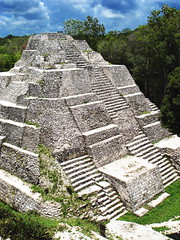 The ongoing collapse of the Stanford financial services empire is global news, but just the latest in a series of high-profile fiascoes in the Latin American banking sector. The Caribbean island of Antigua hosted the headquarters of Stanford, which had operations across Latin America: in Colombia (suspended), Peru (suspended) Ecuador (seized), Panama (taken over), Mexico (investigated), Venezuela (seized), and Miami (raided). Venezuela was hardest hit, with an estimated $2.5 billion invested in Stanford banks and investments, because the company spread aggressively across a country neglected by most international firms given the poor investment climate.
Many have noted the similarities between the Stanford and Madoff frauds, but few have noted the Latin America connection. This writer even calls Stanford "the Madoff scandal done Latin American style," ignoring the impact of the Madoff case in the region, where thousands of investors lost several billion dollars, largely through Banco Santander and the Fairfield Greenwich Group. This is largely because wealthy investors in Brazil, Colombia, and Mexico largely stayed quiet about their losses in the Madoff collapse, out of embarrassment and a fear of exposure to extortion and other financial crimes.
Of course, the Madoff scandal was the high-end version of the related "pirámides" and DMG frauds Colombia, which lured in millions of small-scale, often peasant, clients. Several classic Ponzi schemes collapsed simultaneously as the Colombian government cracked down, wiping out the life savings of millions. DMG was the most prominent of the scams, promising and delivering exorbitant interest rates by laundering billions in cocaine profits from the country's biggest cartels.
So, are Latin Americans just gullible? Financial literacy is a problem in the region, but Madoff and Stanford pulled the wool over the eyes of savvy investors around the world. The real problem is a combination of lack of regulation and poor domestic banking sectors. The SEC obviously dropped the ball on Madoff and Stanford, and the Colombian sat on their hands while the pyramids were constructed across Colombia. Without accessible and secure banking options at home, the poor are pushed into fly-by-night operations like DMG and the rich send their money to murky overseas funds.
While the losses are tragic, if the recent scams inspire an effort towards basic financial education, expanding access to banking, and economic transparency, they won't have been a total loss. While it may be warranted in this case, the news of Ecuador and Venezuela seizing Stanford banks indicates that in the short term, however, these frauds are more likely to be used as justification to nationalize banks and erect barriers to international finance.
(Photo from Whirling Phoenix's photostream)
Monday, February 16, 2009
Commodity price collapse: who wins and who loses?
 One of the great back stories of the ongoing economic crisis is the collapse in commodity prices, which occurred in the second half of 2008 after a record boom period lasting at least five years. The bursting of the bubble has produced clear winners and losers. Thanks to our fantastic contributors, zzzeitgeist has had excellent coverage of these repercussions. I thought I’d try to tie things together.
The biggest winners are consumers, particularly first-world automobile drivers. In the last 7+ months, oil has fallen from $147/barrel to about $37/barrel now. Economists reckon that amounts to a ‘stimulus’ of more than $240 billion. Also, now that the world food crisis has largely subsided, developing-world consumers stand to benefit from cheaper food prices. This means a lot when you spend more than 50% of your budget on food.
The mining sector is obviously a huge loser. Mining is often a boom and bust industry, because it takes a long time to develop new mining projects. It’s hard to forecast future supply/demand fundamentals (remember when this seemed like a good idea?) and unfortunately they can change drastically and rapidly, which is exactly what has happened in the last year. As a result, a number of firms are closing mines, because prices are too low to justify operating costs. Mining firms often take on a lot debt out of necessity – digging mines ain’t cheap. But thanks to the financial crisis and the disappearance of cheap credit, heavily indebted companies are suddenly struggling to stay afloat. Case in point: Rio Tinto, the world’s second largest mining conglomerate. See Rory’s excellent treatment of Rio’s debt woes here.
Finally, commodity-dependent countries suffer perhaps the worst. When prices are high, resource-rich countries are suddenly flush with cash, which they can use to advance geopolitical aims, reward cronies, or invest in infrastructure, education and health to avoid the resource curse (don’t hold your breath). Falling commodity prices have scaled back these ambitions. See Dan’s analysis of Venezuela, Rory’s take on Russia, or this money quote about Iran.
In my mind, these are the biggest winners and losers, but this list is by no means exhaustive. Falling commodity prices also have an enormous effect on agricultural trade, international cooperation, foreign direct investment, Guinea, South Africa, Australia, several Latin American countries, etc. Who else am I missing?
(photo from jeff-o-matic’s photostream)
Sunday, February 15, 2009
Bolithia
- New York Times, "In Bolivia, Untapped Bounty Meets Nationalism," Simon Romero, February 2, 2009.
- McClatchy, "Lithium could be Bolivia's future, if politics don't get in way," Tyler Bridges , January 30, 2009.
- TIME, "For Lithium Car Batteries, Bolivia Is in the Driver's Seat," By Jean Friedman-Rudovsky, January 22, 2009.
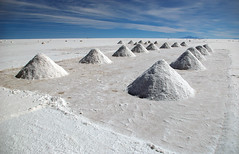 Those grabbed by the haunting photo on the cover of the Gray Lady won't be disappointed. The market for lithium has exploded along with the demand for more efficient car batteries, and as the largest source of the mineral, Bolivia is trying to negotiate how get the maximum social benefit out of this potential windfall. Given the tensions over Bolivia's natural gas reserves and the fact a similar technology-driven mineral boom in the Congo (in that case involving coltan, a key cell phone input) has escalated and drawn out the brutal conflict there, some might worry about a "lithium curse." But the major difference is that lithium is found in the pro-government south, whereas the opposition controls the country's natural gas deposits in the "half-moon" region to the north and east. If President Evo Morales manages the situation prudently, most of the lithium from the salares will end up in Bolivian salaries.
* I typed that facetiously, but copying the links above, I noticed the photo credit for the Times piece is Noah Friedman-Rudovsky, uncannily similar to the author of the TIME story, Jean Friedman-Rudovsky. Trolling the interwebs, I don't see an obvious connection between them, but it does nothing to dispel the perception that foreign reporting is a bit cliquish.
Monday, February 9, 2009
I Drink Your Milkshake!
Monday, October 6, 2008
A black lining
 Well the world is falling apart but there's a little bit of good news...Oil futures closed today below $90.
 But as Brad Setser points out, the Gulf monarchies will feel a pinch in the coming year and that may spell even more bad news for the US economy. Sovereign wealth funds have certainly taken a hit in the recent downturn and exporters the world over are feeling the pinch from these losses; coupled with the downturn in prices, they probably won't be inclined to keep pumping money into Wall Street institutions.
The lower costs of consumption will most certainly be happily accepted by Americans given the coming winter. But the secondary implications for international oil exporters may also shape the next administration's initial foreign policy. Venezuela recently had to cut spending for the next year; Iran will probably be next. Domestic regimes who can no longer lavishly spend on their constituents will probably not be accepted as readily. Rogue leaders - weather in Iran, Venezuela, or Russia - may have trouble holding onto power when they can't continue propping up ill-designed economic systems with booming oil revenues. This is great news for the next administration - whoever is in charge.
Monday, September 22, 2008
The credibility crunch
As I mentioned briefly last week in Zeitlinks, one of the greatest casualties of the current financial crisis will likely be the credibility of American-style, lightly-regulated capitalism. Today, via FP Passport, I saw that President Lula da Silva of Brazil couldn't resist taking a potshot at the American banks involved:
Important banks -- very important banks -- that spent their lives giving advice about Brazil and what we should or shouldn't do are now broke.Ouch.
Thursday, August 21, 2008
The return of history
 Eric Posner over at the Volokh Conspiracy makes an interesting prediction:
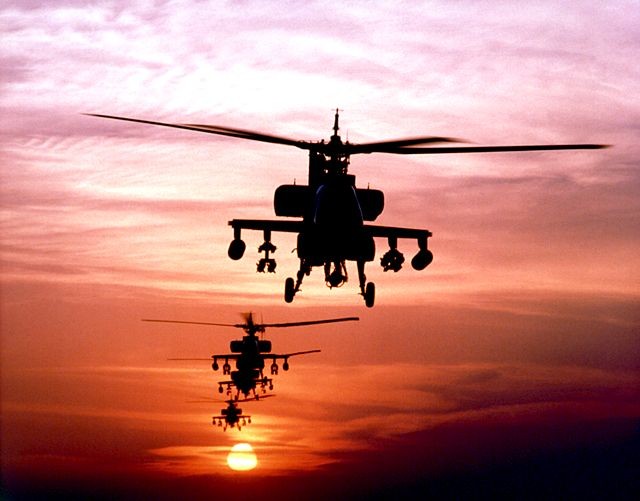
"When historians write about the post-cold war era, which began in 1989, the date of its termination will not be 9/11/2001, as has been frequently claimed, but 8/7/2008, when Georgian forces attacked separatists in South Ossetia and Russia responded with an invasion. August 7 marks the end of American sole-superpowerdom, or hyperpowerness, or hegemony, or whatever you want to call it, an interval somewhat longer than but still very similar to the periods of global preeminence the United States enjoyed for a few years after World War I and World War II."
The war in Georgia has sparked some intense reflection on the state of international relations and American power. I agree that the American moment of hyperpower (I really love that term) is over. But this was never an unexpected development: the US used its hegemonic position after the Second World War to foster a liberal international economic order and promote stability, mutual economic cooperation, and growth. But hegemony is a concept that measures states’ relative power capacities, so by encouraging a system which facilitates world economic growth, sooner or later America’s power would decline in relation to the rest of the world. As hegemonic stability theory teaches us, a good hegemon sows the seeds of its own decline.
International relations is driven by political and economic factors. The political events by which we mark history may lead us to conclude that America’s decline is something new, but in reality the economic forces which caused it have occurred gradually since the end of World War II. Thus, while perhaps the political environment after the Cold War suggested an ‘end to history’, a cursory look at the world’s economic structure would have cautioned that, at best, history was taking a short break.
In any case, the world has certainly woken up. State relations will need to evolve to accommodate a new power structure, but I am not particularly pessimistic about a multipolar world. Today, the US is still the world’s most powerful nation politically, militarily, and economically. The United States will continue to lead but increasingly will need to engage with other nations on less favorable terms. That said, we should be careful not to overestimate the importance of Russia’s recent actions in Georgia. Economic growth has empowered both potential rivals like Russia and new partners like Brazil and India.
In many ways, Russia is an outlier in modern international relations and may need to be treated as such. Its wealth is based largely on strategic energy reserves. It is a bully when it comes to trade (look at its relations with the EU regarding natural gas.) But if you look at the other BRIC countries, you see economies with strong global links that have an interest in systemic stability. It is more likely that such countries can become “responsible stakeholders” in the global political-economic structure.
History clearly isn't over. But then again, it never was.
(Related: see Rory’s excellent treatment of the resurgence of nationalism over at IPE Journal)
Thursday, August 7, 2008
This is your brain on ethanol
 As the other half of the Zeitgeist editorial board, I'd like to take this opportunity to strongly endorse my coauthor's denunciation of corn-based ethanol. By this point, I think it's safe to say that the only ones who are really benefitting from our flirtation with domestic ethanol production are the people of Iowa. The rest of us are really getting the short end of the stick. Some thoughts:
 The relatively new and historically-unprecedented demand for corn is putting an enormous strain on American farmers' production capacity. Land that could be used to grow other crops is now devoted to corn, which causes the prices of those agricultural products to rise (this is why historically the grain futures markets track each other very closely, and why soybean prices almost mirror corn prices.) Meat is becoming more expensive, because a good deal of livestock feed is corn-based, and it takes about 700 calories of corn to produced about 100 calories of meat. A USDA economist recently estimated that about 3% of corn's price increase could be attributed to ethanol demand. Compare that with the UN Food and Agricultural Organization, which argued that it was almost 30% (did the USDA forget to move a decimal point?), and the World Bank who've put the number as high as 70%.
What to do about all of this? There are a few sensible steps to take. First, stop subsidizing ethanol production. It's an enormous waste of money and it's never going to be anywhere near efficient enough to justify. Another oft-repeated but damning statistic: you could feed a person for an entire year with the amount of grain it would take to fill an SUV's 25-gallon gas tank once.
Second, encourage investment in other energy projects. I'm skeptical that governments have the know-how to pick winners in these situations, so why not let venture capital markets take the lead? Anyways, they more or less already are. Governments might consider helping spur further research with calculated tax breaks/credits for green investment.
Third, import Brazilian sugar-cane based ethanol. In contrast to our ethanol made with corn, sugar-cane is more efficient (hence cheaper) and there's no worry about anyone starving because you use the cane to make ethanol instead of sugar. Besides, Brazil has plenty of land to grow the stuff on, without destroying the Amazon rain forests. They are investing heavily in the industry and already exporting significant amounts.
I might have lost the "energy independence" crowd with that last point. But here's an uncomfortable truth: energy independence is not going to happen anytime soon, if ever. As a country, we just consume far too much energy to realistically produce it all at home. (But why is that such a bad thing? Have we all forgotten about comparative advantage?) Anyways, if you are concerned with security, doesn't it make sense to start buying more fuel from a friendly, stable democratic state and "transfer less wealth" to backwards, authoritarian nations in the Middle East? Think of what that would do for our image in Latin America! Why, you can almost hear Mr. Chavez gnashing his teeth already!
(Picture from Rolling Stone Magazine.)
Sunday, July 27, 2008
Inflation woes
 The Central Bank of Zimbabwe is set to lop some more zeroes off the Zimbabwe dollar. They knocked off three back in 2006, and this round is set to see another 3-6 zeroes get the chop. Excuse this humble commentator for his cynicism, but when the annual rate of inflation is above 2.2 million per cent, this isn't going to help much. It will likely improve transaction efficiency for a short period of time, but unless Zimbabwe takes some concrete steps to rein in inflation, sooner than later the currency will be just as worthless as it is today.
Venezuela tried this trick last year, when it introduced the Strong Bolivar, which President Hugo Chavez promised would help curb inflation. A 'Strong' Bolivar is essentially just a normal Bolivar, Venezuela's unit of currency, with three zeroes lopped off. Unfortunately, Venezuelan inflation has actually gotten worse since then, reaching 32% in Caracas in the month of June.
I wrote last month about how inflation is fast becoming a major financial worry. This is especially true in developing countries and emerging markets . As painful as the medicine may be, now is the time when such countries should be prioritizing inflation control over economic growth. The short term losses are undesirable, but the long term dangers are too real to ignore. Keynes said it best:
As inflation proceeds and the real value of the currency fluctuates wildly from month to month, all permanent relations between debtors and creditors, which form the ultimate foundations of capitalism, become so utterly disordered as to be almost meaningless; and the process of wealth-getting degenerates into a gamble and a lottery.
It's troubling when there exists such chronic financial mismanagement in economies like Venezuela and Zimbabwe, which could both be in much better shape than they are. But they're not, and unfortunately it is the citizens of those countries who pay the highest price for that.
Sunday, July 20, 2008
The buck stops where?

The Times reported yesterday on the latest announcement in Raul Castro's string of changes to Cuba's stagnant economic structure.
The most recent aspect of his shift from the socialism of his elder brother allows farmers access to government land to privately farm up to 99 acres. More so than the bureaucratic fat-trimming he promised when he took office, the new policy reflects a substantive shift away from outdated ideology, ill-advised borrowing, and staggering inefficiency.
The successes of China and the domestic and international umbrage towards Chavez may have awakened Raul that he needs to move beyond his brother's policies. His attempts to revitalize the economy and allow for private enterprise are a step in the right direction. It's a wise move for his political stature and the fate of his countrymen.
We should not get too excited as the government will still own the land and political freedoms are still woefully inadequate. We can only hope that with economic liberalization, political space will soon open up. I'll leave you with a quote from Raul struck me as quite insightful to the state of Cuba and his vision.
“Socialism means social justice and equality, but equality of rights, of opportunities, not of income...equality is not egalitarianism.”
Subscribe to:
Posts (Atom)


