Showing posts with label pop culture. Show all posts

Sunday, April 19, 2009

We need a book deal

I (and my mountain of student loans) really need international political economy to go viral.

I can has liberal democracy and economic liberty, right?!

(Photo from Philonoist)

Friday, March 27, 2009

Buying bras shouldn't be this complicated...

One of the irony's of Saudi Arabia's gender segregation is the way in which women shop for lingerie - uncomfortably and inappropriately.

As a result of labor policies aimed at preventing women from dealing with male customers, women are not employed as salespeople. This means that in lingerie stores men end up talking to women about bras/thongs/etc and checking out their bodies to determine cup sizes. On top of that, fitting rooms are banned in the kingdom, since women undressing in the close vicinity of a man is unacceptable.

Not only does this not make sense in ANY way when you consider the conservative nature of Saudi society, (in a gender-segregated society, why would men not be banned from lingerie stores?), but even in the US and Europe, men typically do not sell lingerie to women. Well, as they say in the Arab-world, HALAS! Enough!

A group of Saudi women have launched a boycott of lingerie stores until they employ women. The women are not asking to work WITH men. Far from it - they are not demanding any major shifts in Saudi culture - in fact, they are supporting it. They don't want men to be involved in this type of intimate purchase at all. They want men completely removed from the process, as you would think conservative leaders would agree with.

The boycott was launched on Tuesday by approximately 50 women who gathered at the Al-Bidaya Breast-feeding Resource and Women's Awareness Center in Jeddah, run by founder Modia Batterjee. The aim of the boycott is to pressure the government to IMPLEMENT a law that has been in existence since 2006, which mandates that only women can be employed in women's clothing stores. Reem Assad, a finance professor at Dar Al Hekma College in Jeddah says: "We are raising awareness and calling for the implementation of the law." Assad started a Facebook group which now has 1,680 members, and posted an online petition which has at this point been signed by 1,700 people.

Since only a few Saudi papers have written about the boycott, it has depended largely on word-of-mouth and the internet. The women who launched this campaign knew how to leverage online communications and social media to disseminate their message quickly and effectively. The impact of the campaign remains to be seen, but I am curious to see how else Saudis will chose to utilize new and social media to initiate these types of activities in the Kingdom.

Sunday, March 15, 2009

Russia Almost Gets Served

Eurovision, the annual song competition held among active member countries of the European Broadcasting Union, is just around the corner. This year it will be held in Moscow, so Georgia, still reeling from its embarrassing military loss to the Russian bear this past summer, decided to redeem itself with a disco song: “We don’t wanna Put in.” The chorus:

We don't wanna Put in
The negative move
It’s killin' the groove
I'm a-tryin' to shoot him
Some disco tonight
Boogie with you
First, Georgia, disco? Really? Second, very subtle, Georgia, but not subtle enough for the European Broadcast Union. That’s right. The song has been banned from competition as it is too political. The rules clearly state: No lyrics, speeches, gestures of a political or similar nature shall be permitted during the Eurovision Song Contest. But what about Finland’s losing entry in 1982, you ask? Hey everyone’s asking it.

Well sirs and madams, Kojo’s “Bomb out” apparently does not count as political, because it was a message of peace that called for an end to nuclear weapons. And, apparently, a song threatening to shoot someone named “Put in” is not considered an olive branch in the European community. Plus Kojo is rocking out this red leather suit. Now you get served, Georgia!

Thursday, March 12, 2009

Facebook goes Arabic


Facebook currently operates in 40 languages- from Afrikaans to Greek... but no Arabic... until now. 

Although Facebook has been available throughout the Middle East since it expanded beyond the US college network in 2006, it will now be fully functional in Arabic.  According to an article in the Guardian, "50 million of the world's 250 million Arabic speakers already use the internet, but Arabic only makes up 5% of global web content."

Considering the fact that there are currently over 300,000 Facebook users in Lebanon, and over 250,000 in Saudi Arabia- this should be an interesting trend to track.  Social networking is often used differently in various cultural contexts... it will be informative to see how Facebook is utilized throughout the Arab-speaking world. 

Wednesday, March 11, 2009

Atlas fudged

The focus of "The Word" this evening on Steven Colbert was the resurgence of Atlas Shrugged in public commentary. According to the Economist, sales of the book are up, and every Fox News pundit seems to be spouting the importance and timeliness of Ayn Rand's masterpiece. 

All this makes me wonder. When a historical or literary metaphor or analogy such as this seems to take off, it should spark our skepticism. I'm of the belief that most of the people bolstering Rand's genius haven't read beyond her Wikipedia page.

Is anyone getting a slight feeling of deja vu?


Thursday, January 15, 2009

Baby, it's cold outside...

Let's hope Mr. Barroso's "warning" to Russia is more convincing than Mr. Blix... 

Come on Russia, play nice... the rest of the world doesn't have your vodka supply to get through the winter.

Wednesday, January 14, 2009

Recession fun: spot the inferior good!

In economics, an inferior good is a one which is consumed less as income rises. This is an easy concept to understand: as you get older and make more money, you’re probably going to eat less Ramen Noodles. However, consumption of inferior goods is also broadly counter-cyclical, meaning that as the economy slows, consumption is likely to rise.

We're in the midst of a bad recession, which means that many people have less money to spend on leisure. Instead, here’s a game you can play for free. I call it: SPOT THE INFERIOR GOOD! The rules are simple: whoever identifies the most goods for which consumption has increased during the last year, wins. Post lists and debate whether goods are actually inferior in the comments; winner gets a free cup of Ramen Noodles!

Here’s my list:

1. Natural Light Beer
2. Subway Veggie Delite Subs
3. Pornography
4. Spam
5. Boxed wine
6. Tuxedo t-shirts
7. Rob Schneider movies

Hey, I said it was a bad recession...

Tuesday, January 13, 2009

Comics in crisis

I always knew Bill Watterson was prescient, but this is just scary.


(Nice job World Bank; really, I didn't think you had it in you) 

Monday, January 12, 2009

Slumdogs and status quos

As awards seasons creeps up on us it's nice to enjoy a little mindless movie gossip amongst the never ending financial commentary. But of course those of us in Washington, which is apparently Hollywood for ugly people, can't just let movies be movies. A little healthy dose of IR theory in our cinema won't kill us, right? Right?! David Rothkopf on Slumdog Millionaire (at his new blog):
When I saw the film...I left the theater wondering to myself about the way that international affairs are covered in the media or discussed in Washington. Most of the stories we write are about leaders, presidents and congresses, about policies and summits, about strategies and budgets. Every so often, in a war, we capture the shot of an injured child or weeping mother, but we miss the essence of it all, the stories of individual people.
Rothkopf is right that we should focus a little more on the people who need development assistance, not the elites tasked with its implementation. This isn't exactly new thinking, though. My favorite economist has been saying this for years; the "capabilities" of people are what matter in helping a country grow. But in trying to steer a policy community as disparate as development, we should be careful to avoid cliches and one-size-fits all prescriptions - the very aspect of established policy circles that got us to this tired method of international study in the first place. 

The movie was fantastic; but take it for what it is - a great story. When pundits and critics start to heap praise like this on it (which everyone seems to be doing) we should be very wary. After all this is the most cliched understanding of modern India that there is:
Juxtaposing the brutal poverty of Mumbai's slums with the glitter and promise of a global television phenomenon like "Who Wants to be a Millionaire?"...[the spirit to overcome this gap] in particular animates all of India.
C'mon! This is straight out of a bad, cheesy travelogue that 20 pages later will tell you which ashram offers the best enlightenment. If you want to reform how people cover and think about policy, don't fall victim to the same generalizing (and frankly lazy) thought patterns. Still, you should go see the movie. 

(Photo by Cine Fanatico)

Thursday, January 8, 2009

South Korean trade politics: NOT for the faint of heart

Thought the West had a monopoly on contentious trade politics? Think again:
Opposition lawmakers ended their violent, 12-day siege of South Korea’s parliament Tuesday after successfully delaying a vote on a major U.S. free-trade deal. Democratic Party legislators had occupied the National Assembly since Dec. 26, fending off security guards who tried to drag them out by force last week. The sit-in ended after the ruling Grand National Party abandoned its bid to ram through the legislation before President-elect Barack Obama takes office Jan. 20. South Korea and the U.S. agreed to the landmark accord in 2007 to slash tariffs and other barriers to trade, but the deal sparked an outcry from farmers and labor, and Obama has hinted he will seek to renegotiate it. The deal would be the largest for the U.S. since the North American Free Trade Agreement more than a decade ago.
Of course, all this comes after the opposition tried to force their way into a barricaded room where the free trade agreement was being discussed using sledgehammers back in December. Yes, sledgehammers. Grand National Party members responded in kind, spraying fire extinguishers at the opposition party members. Yes, (sigh)... fire extinguishers. At least one person left the scene with blood streaming down their face.

Ridiculous as this all sounds, politics devolving into fisticuffs is not so unusual in South Korea. Still, it shows how contentious the domestic politics of trade can be on both sides of a proposed agreement. South Koreans are uncomfortable importing American beef, among other things. Americans are frustrated at South Korean quotas on imported autos, among other things.

It's all very unfortunate, because the KORUS FTA is the most economically-meaningful trade deal that the Bush administration managed to negotiate during its tenure. As it stands, you’re more likely to see another bench-clearing brawl in the South Korean National Assembly than this agreement get ratified in either country...
If you haven't seen Emily's excellent post yesterday about the riots in Greece, have a look for another dose of political violence.

(The picture above is from a 2004 brawl in the South Korea National Assembly, via Delaware Online. For the truly unbelievable pictures from the December battle, check out this New York Times article.)

Tuesday, January 6, 2009

Ya I know, poor taste

Hey Angola, 1995 called. They want their virus back.

Monday, January 5, 2009

Martin Sheen is an economics badass... with a heart of gold

Via Trade Diversion, we have this unintentionally hilarious snippet of dialogue from the West Wing. In my head, I read it in the Dirty Harry voice:
When I was 26, I wrote a paper supporting the deregulation of Far East trade
barriers. Nearly got thrown out of the London School of Economics. I was young
and stupid, and trying to make some noise.

This is one of President Jed Bartlet's line. On the show, the character, played by Martin Sheen, earned his Master's and PhD at the London School of Economics. As a brand-new alum of the LSE, I can confidently second Jonathan Dingel in saying that A.) this sentence makes no sense and B.) who would ever get thrown out of any academic department, let alone one at the London School of Economics, for arguing (I think) in favor of trade liberalization?

I never really got into the West Wing, although I've heard it's pretty good. Still, I can't help but feel like this is one of those instances where a TV character is only as smart as the people who write for him...

Wednesday, December 3, 2008

You just got Wurzelbached

I didn't know being an unlicensed plumber qualified one to suggest heavyweight economic texts. How is this guy still making news? Granted, it is American Spectator, but still. Joe the Plumber's favorite books (sigh)...
Temples of Convenience—and Chambers of Delight (Lucinda Lambton): "It shed a great deal of light on the development of the lavatory, or as we say over home, 'the hutch.'" Most of the privies in the book are "the product of non-union labor." 

Flushed with Pride: The Story of Thomas Crapper (Wallace Reyburn): "Just when you think you know everything about plumbing, this book comes along."

Plumber's Handbook (Howard C. Massey): Particularly useful "on the topics of greasy waste systems, outside waste interceptors, and what for me has been a longtime conundrum, local gas codes." 

The Theory of Money and Credit (Ludwig von Mises): "It brought monetary theory into the mainstream of economic analysis. It is important reading for these troubled times."
Tyler Cowen thinks Ron Paul's camp fed Joe the von Mises. Not a bad guess, though I would venture that he's gearing up for a 2010 House run. His platform? The exact opposite of this.


Monday, November 24, 2008

Model an insurgency

David Kilcullen spoke at SAIS recently, giving what I suspect is his one of his favorite talks: Fight Club as a model of an insurgency. Kilcullen was the senior counterinsurgency advisor to General Petraeus, who you may have heard is a smart guy. He's had a bunch of really good ideas and his latest take on Afghanistan in The New Yorker is particularly noteworthy.

Insurgencies develop in strange ways and using Fight Club as a model is useful because, as it takes place in America, the observer isn't as distracted by cultural differences, thus allowing the universal attributes of insurgencies to become more apparent.

One general problem that's obvious without Fight Club is the problem of young men. One anthropological theory is that human society developed to deal with agitated or feisty adolescents. Primatologists politely refer to young male monkeys undergoing "dispersal," but there came a point when simply booting young males out of the troop/tribe/group wasn't feasible. Rules and sanctions from a leviathan (or religion) are needed to control people, especially the young males. When formal rules and sanctions disappear, you'd better watch out for the young men, especially when they are well armed...Disaffected youth must be reckoned; tension builds when achievements don't match expectations. The Middle East has quite a youth bulge and when educated people don't find self-actualization (read: decent jobs) they get mad

Fight Club brilliantly lays out the developmental stages of an insurgency:

1) Grumpy like-minded individuals find each other
2) A Leader emerges
3) Group formation, rules are established
4) Organization formalization, Tyler Durden starts giving homework assignments
5) Movement - ideological control by the founder can be lost at this point
6) Revolution - intimidate & infiltrate authorities; attempt to overthrow the government

Violence increases at each stage as members are desensitized to brutality and undergo hatred transference; moving from action against the wider out-group to a specific individual. The initial cause can diminish as members become motivated by secondary issues, such as profit or revenge ("His name is Robert Paulson...")

So what do you do about it? One of the most effective means of dealing with radicalized young men is finding them wives and giving them incentives to have children. In the late 70's an extremely successful PLO deradicalization program  involved taking out marriage ads for 5,000 radical fighters. Less than one percent later returned to fighting. An ol' ball and chain can be quite effective at keeping the peace!

There may be no silver bullet, but the first place to start is understanding the causes and group dynamics within an insurgency. And why have the rules, sanctions, and social norms failed to prevent violence? COIN isn't easy.

Wednesday, November 19, 2008

Press freedom in Russia

Reporters Without Borders (RSF), a France-based nonprofit organization, recently released its annual report, Freedom of the Press Worldwide in 2008. In it, RSF has developed a rather strong argument that the Russian government is actively destroying independent media and seeks to quash any signs of dissent or opposition.

Basically, the situation facing Russia's independent media can be summed up in any number of negative words: horrible, dire, God awful… In the last year, the Russian government has raided and shut down several independent newspapers, and others had to shut down because printers were too afraid to publish the newspapers. Novaya Gazeta, Novyj Times, and Kommersant are the only major independent outlets that remain.

Throughout the year, several independent journalists were arrested just for covering opposition demonstrations. Many journalists were brutally beaten. Most recently on November 13, editor Mikhail Beketov was found in a pool of his own blood after receiving numerous death threats for opposing the construction of a bridge. Also, at least two journalists were forcibly sent to psychiatric hospitals this year – an old trick straight out of the Soviet playbook where you discredit the dissenter by claiming he's insane and end up making him insane because Russian mental hospitals could break even Chuck Norris. It's pretty old school, but effective and a clear violation of human rights.

Where does this leave the Russian population? Well, the dissenting portion of the population remains under constant threat of losing their freedom or their lives. And the remainder of the population is informed of only what the government wants known. For example, if today you should happen to peruse Izvestiya – a state-owned paper – you might be interested in one of its top stories: "Is Barack Obama the Anti-Christ?" Happy reading, Russia.

Monday, October 27, 2008

(Ir)rationality

Lifted completely out of context, but interesting nonetheless. Via the Undercover Economist:
Game theory is the economist's tool of choice to analyse what happens when two or more people have to negotiate, co-operate, compete or otherwise engage with each other. The essence of game theory is that each side would expect the other side to anticipate and respond to his likely actions.

Game theory shows that there are times when irrationality (real or feigned) is a highly effective strategy. Someone who seems impervious to logic is someone who also gets his own way a lot. Consider, for example, toddlers, terrorists, bosses, dogs and the late Charles de Gaulle...by demonstrating a willingness to punish [a person or group] for no immediate personal gain, [the instigator] will gain in the long term anyway. Irrational perhaps, but rationally irrational. 
I would love to see a modern Ken Arrow test this against our last eight years of foreign policy; or better yet predict the next administration's. Rationality may be the basis for most of our decisions, but when it increases a country's utility (whether it is real or its leaders think it will) to use something else to justify action (such as nationalist fervor or resource control), that course is sold to the public. If politicians don't embody rational irrationality, I don't know who does. Ah wait, yes I do.


Wednesday, October 22, 2008

Associative decline?

Via the TED blog today.
Economic troubles will trigger the decline of the free economy, collaboration, and open-source - including communities such as Wikipedia - and even, perhaps the blogosphere itself. People will be less likely to give away 'their intellectual labor on the Internet in the speculative hope that they might get some 'back end' revenue.
C'mon. Seriously? The idea that a burst bubble causes people to abandon collaborative efforts is pretty baseless. It is always in the best interest of efficient and curious people to work together and the internet has certainly revolutionized the amount of ways this is possible. Unless this crisis spells the death of homo rationalis, this will continue to be the case. The main point of 'intellectual labor' on the internet is not to get 'back end' revenue, it's to prove the viability of those who write psuedo-intellectual blogs (your authors included) and increase future utility.

Collaboration comes out best when times require sharing of information. At a time when everything else is falling apart, nothing should stop the openness of information on the internets.

Monday, September 29, 2008

Bailout blues

Market: heal thyself. That’s essentially the message Congress sent the financial system today by voting against the bailout. I must admit that I’m caught off-guard, because I always assumed that the bill would pass. Normally, considering the gravity of the situation, party leaders never would have let this come to a vote if they didn’t think they had enough support to pass it.
Perhaps this speaks to how tepid support for the bailout actually was, but this was never news. Who would relish spending more than the total cost of both our current wars in Iraq and Afghanistan on something that is poorly understood, roundly criticized, and widely disliked by the public? Nobody, especially not politicians, who of course have a sixth sense for protecting their own skin. The point is, as Messrs Bernanke and Paulson made clear this week, the bailout may be wildly unpopular, but it is also badly needed.

There is plenty to say about the plan’s efficacy, about its design, and about whether it would succeed. These are legitimate debates, which we need to have. They’ve played out nonstop since intervention was proposed about 10 days ago, and there are strong disagreements about how to proceed from every possible ideological viewpoint. Tellingly, the sole consensus among the levelheaded seems to be that the only thing worse than action is inaction, especially after the government implied that it would intervene. By my reading, everyone from Megan McArdle to Paul Krugman held their noses and endorsed the bailout.

Party leaders on both sides of the aisle understood the urgency and gravity of the situation. Hell, I’ll go further and argue that the rank and file party members understood this, ideological revulsion of the idea aside. I simply refuse to believe that there is even one member of Congress who does not appreciate how dire the circumstances are, even if they don’t grasp the financial nuts and bolts.

And yet, the bailout failed. Why? Some blame Nancy Pelosi’s “overly partisan” speech before voting. Some cite ideological qualms that were too great to swallow. Hogwash. Felix Salmon nailed it: this was a classic free rider problem. Collectively, the members of Congress expected that they would pass the bill, yet it was simultaneously in representatives’ personal interests to vote against it. As long as the bill passed, any Congressman who voted ‘no’ would doubly benefit. They would be able to claim to their constituents, mostly opposed to the bailout, that they made a principled stand and voted ‘no’, AND the dirty work would be done by others. The problem is, predictably in a free rider situation, too many people tried to take the easy route and the bill failed.

I am absolutely livid that Congress, even in a time of such great economic danger, would put their own partisan interests before what is best for the country they profess to serve. Read Megan McArdle’s scathing condemnation; that’s exactly how I feel at the moment.

So now the Dow has fallen 778 points in one day, which is a historical first. The S&P is down 8.8%, the largest fall since the 1987 crisis. The TED Spread is up 23%. This is very unnerving stuff, people. You remember in Ghostbusters when that jerk from the EPA shuts down the ghost storage facility even though Egon tries to talk him out of it? And then the buzzer goes off and all the ghosts are set loose and terrorize New York City? I hope that the experts are wrong, but that’s what today feels like: voting ‘no’ on the bailout was sort of like ignoring Egon, and you never ignore Egon.

Sunday, September 14, 2008

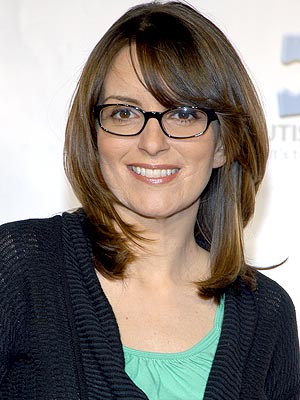
Tina Fey for President!

Tina Fey answers America's call...


Friday, August 29, 2008

Ladies and Gentlemen, your Republican VP nominee...


Whoops, sorry! Here we go:


Man, I really hope (for America's sake) that Tina Fey finds the time to make a guest appearance on SNL this fall...

(Photos via People.com and Living Alaska blog)